November 1, 2019
Micro financing to help end poverty in Pakistan
By Abdus Sattar Ghazali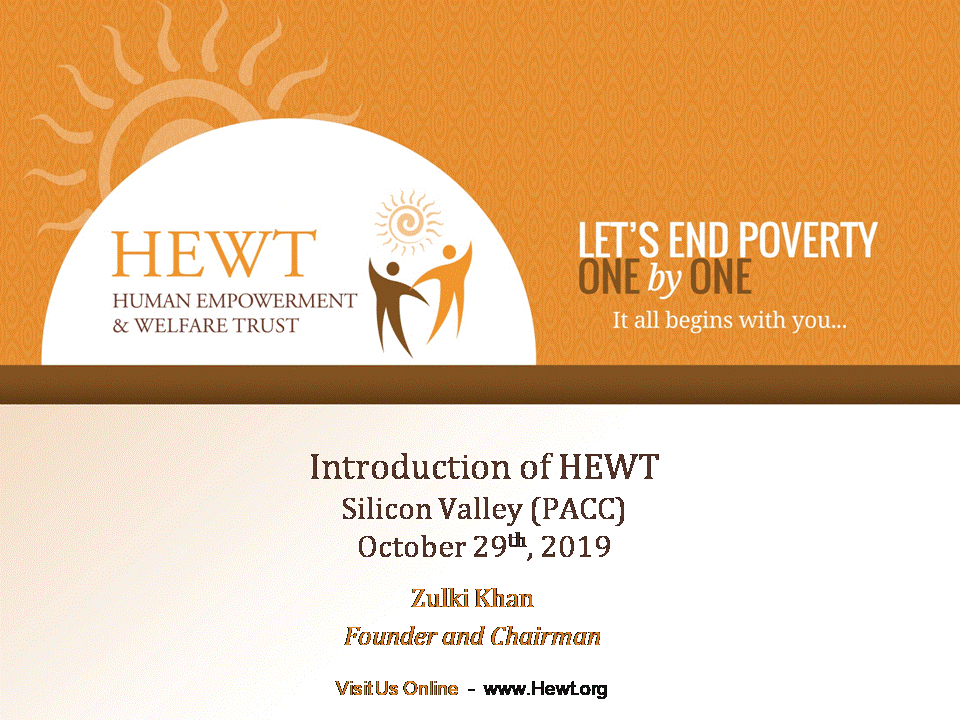
Karachi-based Human Empowerment and Welfare Trust (HEWT) held a gathering of its supporters in the Bay Area where the HEWT founder Zulki Khan gave a presentation about the successful work of the Trust.
The event was held at the Chandni Restaurant, Fremont/Newark CA on October 29, 2019. Maryam Turab was organizer of the event.
The HEWT was launched in 2012 under the motto: Let”s end poverty – one by one by empowering poor people through small business loans or microfinance.
Zulki Khan explained the work of the HEWT which is working in all the provinces of Pakistan plus Azad Kashmir.
Syed Zahid Yazdani, the Chief Executive of the HEWT, shared three life changing stories of the persons who were helped by the Trust.
Shakeela Bagum from Sufaid Dheri Naudebala, Khyber Pakhtunkhwa, is able to earn around $300.00 per month with a microloan of $250.00 for her embroidery business.
Abdul Haleem of Chitral Valley, Kalash can make around $1500.00 per year through his Tailor & small grocery store with a microloan of $240. Abdul Haleem return this loan within six months.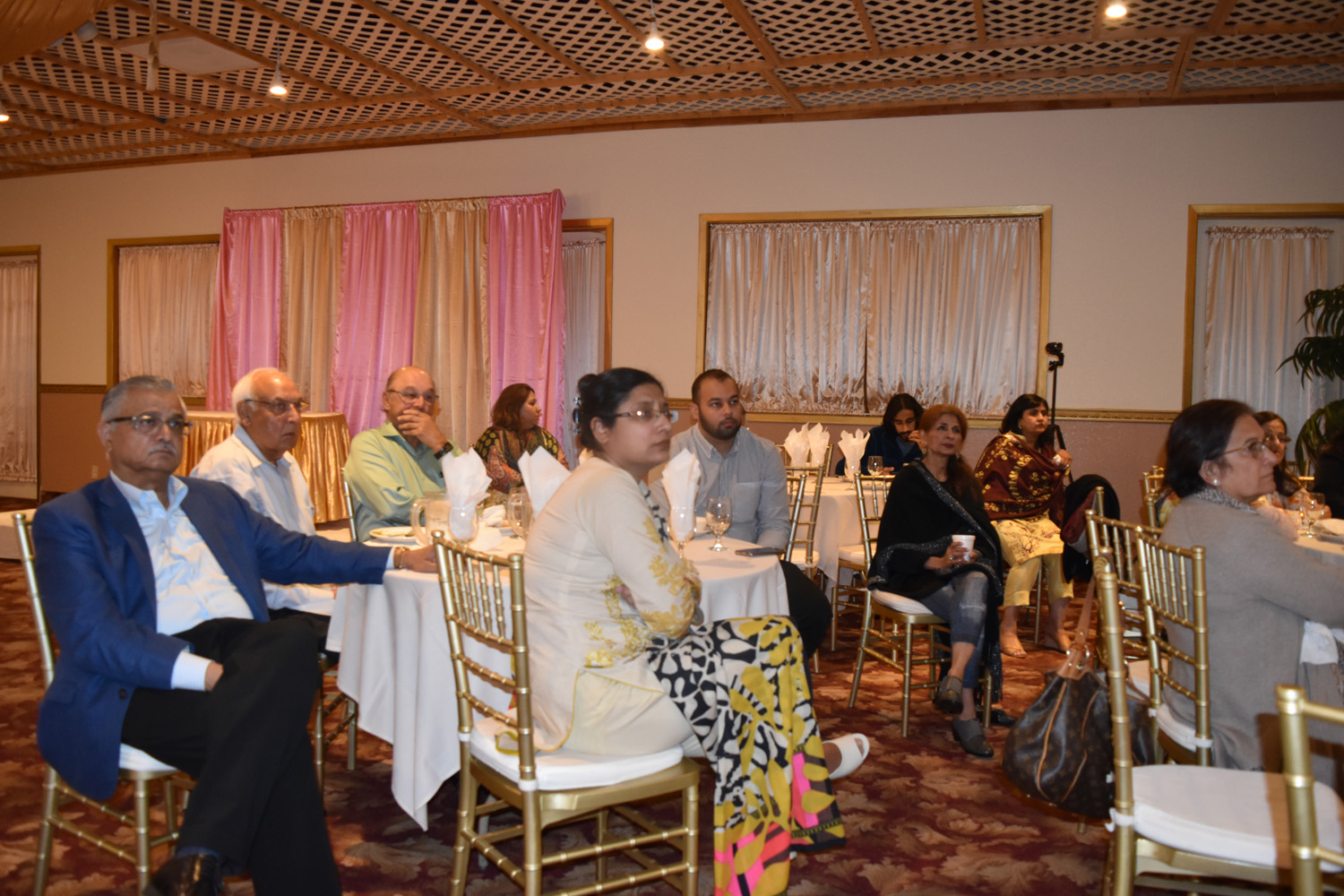
Saleema Bibi of Sarai Kharbooza, Islamabad has established a Sewing Training Center to earn around $2,000.00 per year.
Karachi-based Syed Zahid Yazdani was on a visit to US.
Human Empowerment and Welfare Trust was started with the intention of helping poorest of the poor people, so that they can get out of the cycle of poverty and this is the reason HEWT does not charge any interest on the loans it disburses. All the expenses are carried out by the founder to run the organization and all the members and affiliates on the organization are volunteers.
The micro loan program is available in few cities in Pakistan right now, but Trust’s goal is to expand it to all the big and medium sized cities soon.
Interestingly, HEWT loans are offered mostly to women and some men also, regardless of their religious, ethnic, or tribal backgrounds. Loans are mostly given to women because historically when they start making money, they elevate the whole family from children’s education to their diets and their other emotional needs. This way the lifestyle of the whole family gets uplifted.
Donors from US can donate to HEWT through I-Care Fund America, USA which is a 501 © Tax Exempt status.
Poverty in Pakistan 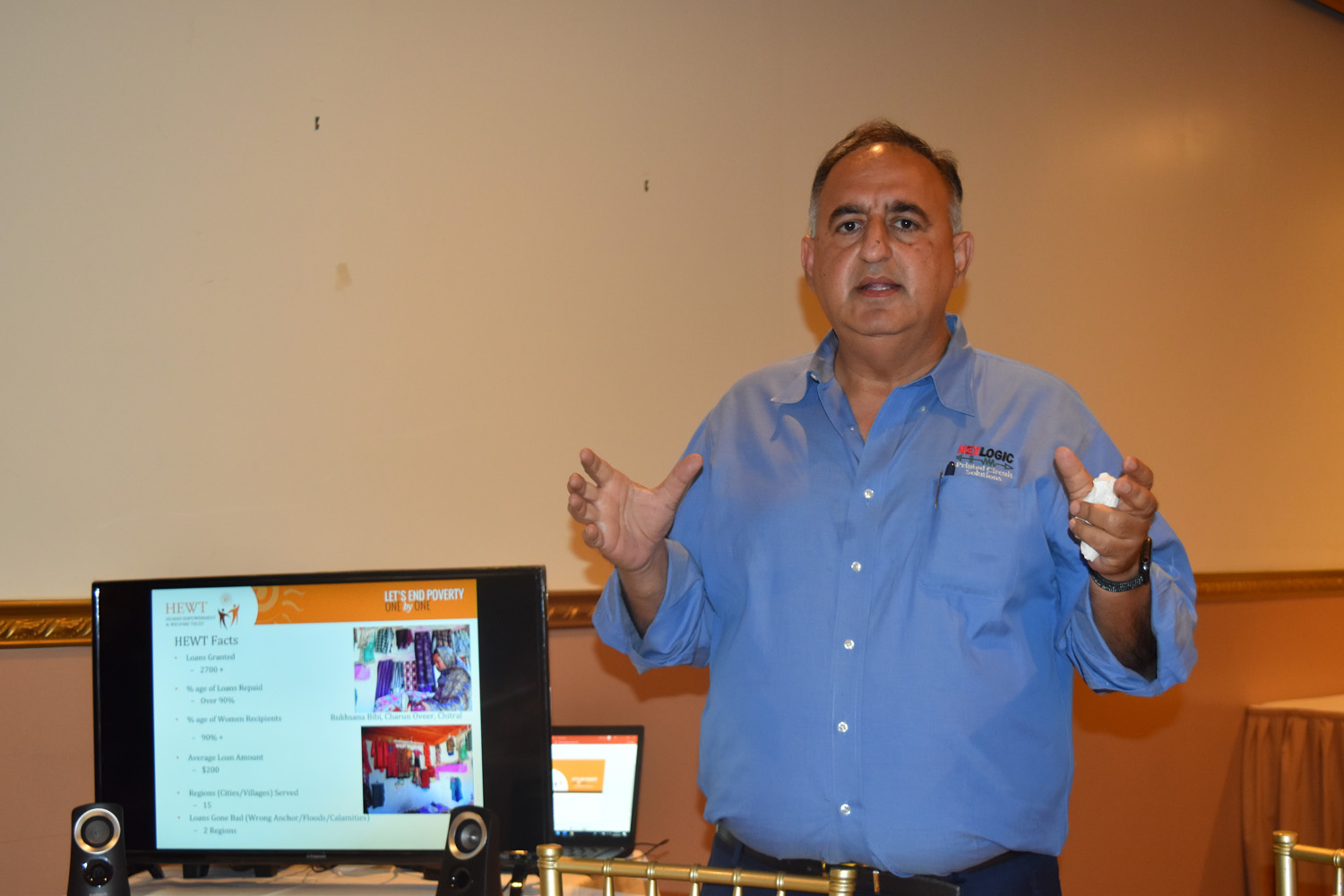
Tellingly, poverty is one of the least discussed issues in Pakistan. Successive governments in Pakistan have been intentionally shied away from this debate. For example, the Pakistan Peoples’ Party government didn’t release poverty statistics for years it stayed in government. Similarly, the Pakistan Muslim League-Nawaz didn’t release trustworthy poverty figures during its tenure.
Alarmingly, there is considerable ambiguity around the methodology to estimate the rate of poverty. As a result, there is no single and well-accepted poverty rate in Pakistan. Each academic study on poverty estimation gives its own poverty rate that may be different from others. In some cases, there are significant differences between the calculated poverty rates.
In June 2016, Pakistan’s first ever official report on multidimensional poverty was launched by the Ministry of Planning, Development and Reform. According to the report, nearly 39 percent of Pakistanis live in multidimensional poverty, with the highest rates of poverty in FATA and Balochistan.
Pakistan was placed at 150 among 189 countries in UN’s 2018 Human Development Index (HDI)’s annual rankings that is measured by combining indicators of life expectancy, educational attainment and income.
The first UNDP Human Development Report (HDR) was prepared and launched under the leadership of the late Dr Mahbubul Haq, a former Pakistan finance minister.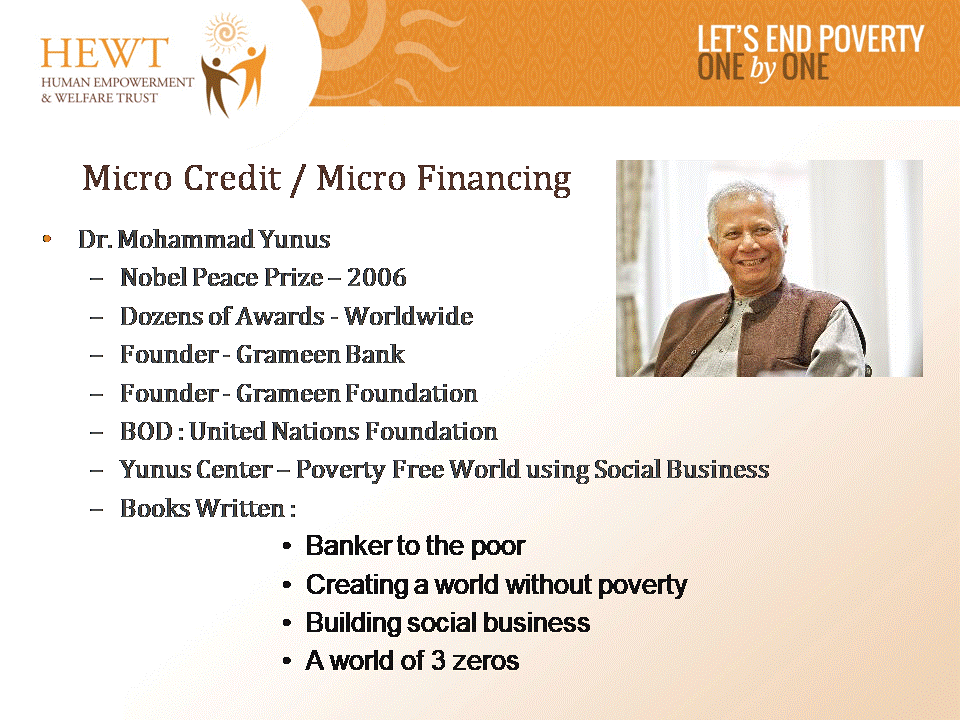
In other South Asian countries, India ranked at 130 on the index; Bangladesh: 136; Sri Lanka: 76; Maldives: 101; Nepal: 149, and Bhutan 130.
The Role of Microfinance on Poverty Alleviation
Microfinance services have emerged as an effective tool for financing micro-entrepreneurs to alleviate poverty. Since the 1970s, development theorists have considered non-governmental microfinance institutions (MFIs) as the leading practitioners of sustainable development through financing micro-entrepreneurial activities.
More than half of the world’s working-age adults (about 2.5 billion) still do not have access to financial services of regulated financial institutions. Therefore, a good number of working-age adults around the world depend on informal moneylenders for loans to start or maintain a micro-enterprise.
In the past 25 years, microfinance service has been considered as one of the most significant innovations in development policy around the world.
In 1970’s Muhammad Yunus presented a model which called as Grameen bank or Grameen model. This model is a strategy of empowering the poor to reduce the poverty and become the base of modern microfinance. Microfinance ideologies more closely linked to the Economist Muhammad Yunus, who was a professor in Bangladesh in early 70. He has propagated the concept of microfinance in the midst of famine throughout Nation began to make small loans to poor families in nearby cities, in an attempt to break the vicious circle poverty.
See More Pictures Watch Videos on You Tube: Part One Part Two Report on Pakistan Link